Pet?

An exotic animal is unsuited as a pet

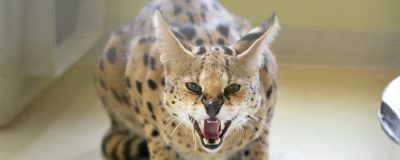
More and more people consider cats and dogs too common and go in search of a more interesting or exciting pet. On impulse an exotic animal is bought as a companion. However, these non domesticated exotic animals are not adapted to living in a house. They will always remain wild, with all the consequences: frustrated animals, destroyed living rooms and very scared owners. It's AAP's opinion that keeping these animals should be prohibited. Below you can read why.


Monkey or ape

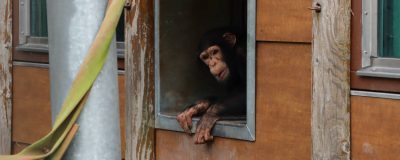
There are numerous types of primates, with different ways of life and with a size ranging from a decimetre up to two meters. Still, they share a number of characteristics: they are all social animals living in hierarchical groups. During the first life years the young receive much care and attention from their mothers, sometimes helped by co-caretakers. In this period of time the young are still a law unto themselves: the adults make allowances for the monkey business they get into. When the young get bigger their leeway becomes less - around puberty they cannot count on the indulgence of their peer group any longer. This is understandable since in this life phase the animals will turn against their peers. As lowest in rank they will literally need to fight their way to a higher position.

Read more...

8/10

2008


Raccoon

The raccoon, in the family Procyonidae, is found in most parts of North America. They usually live in forests, nearby water, which provides important food, such as crabs and other small animals that live in the water.

Read more...

8/10

2008


Skunk

Skunks belong to the family Mephitidae and are sometimes called stink badgers. They are widespread in North America, from South Canada to Mexico. With their thick, artistically black-and-white striped fur skunks are particularly beautiful. Because skunks are not very aggressive they are a wanted housemate.

Read more...

8/10

2008


Siberian Chipmunk

The Siberian Chipmunk ranges from Siberia to South East Asia. Just like all other Sciuridae it is a rodent, and being a chipmunk an excavator as well (it makes food caches in the ground).

Read more...

8/10

2008


Prairie dog

Prairie dogs are a bigger type of ground squirrel, that frequent the desert areas of North America. They are social animals that live in large colonies or "towns" collections of prairie dog families that can span hundreds of acres. Just like moles they burrow a far stretching passage system and pile up the excavated earth in mounds, from which they can gaze around the surroundings sitting on their hind legs. Like all rodents they have long front teeth they keep short by gnawing on roots and branches. Their name is derived from their warning call, which resembles the yapping of dogs.

Read more...

8/10

2008


Coati

The coati is a member of the raccoon family (Procyonidae), native to South, Central, and south-western North America. Coatis are sometimes called hog-nosed coons and owe this nickname to their protruding organ of smell which they use to rummage the ground for food, such as insects and worms. Being eager fruit eaters they easily climb into trees, where they also sleep at night, rolled up in the axil of a bough.

Read more...

8/10

2008


Degu

The degu is a South American rodent, related to the guinea-pig and the chinchilla. Degus originate from the scarcely vegetated slopes of the Andes: Rocky domains with some shrubbery.

Read more...

8/10

2008


Arctic Fox

Arctic Foxes live on the barren tundras of all continents around the pole circle. They are predators, but they often nourish themselves with animal corpses (carrion) as well. For example, they eat the remainders of a polar bears meal or even their excrement. Washed ashore marine animals, small rodents, eggs and young birds complement their menu.

Read more...

8/10

2008


Chinchilla

Just like its direct relative, the degu, this hole digging rodent originates from the Andes mountains, mostly from Chile. It puts modest demands on its food: it does not need much more than some grasses, seeds and the bark of shrubs that grow on the arid slopes.

Read more...

8/10

2008


Wallaby

Like all kangaroos, the wallaby is a marsupial and lives exclusively in Australia. It is about half the size of its big brother, the Giant Red Kangaroo, but with its length of 75 centimeters (measured without tail) the wallaby is still quite a big fellow. Kangaroos are usually friendly grazers, but the males can be very aggressive among themselves.

Read more...

8/10

2008


Raccoon Dog

The Raccoon Dog is a nocturnal animal which belongs to the canid family (which includes dogs, wolves, and foxes); Its only resemblance to the raccoon is its fur pattern. The Raccoon Dog originates from East Asia (Mongolia, China, Korea, Japan) but when it became popular as a furbearer it was introduced to the Soviet Union. It was overlooked that it is a shy but tough survivor, and, what is more, a rambler. From the areas it was relocated to it spread to North and Central Europe where it found suitable habitats everywhere: swampy or slightly forested landscapes, and river dells covered by broad-leaved trees.

Read more...

8/10

2008


Sugar Glider

The Sugar Glider is a marsupial, common in light wooden areas in East and North Australia. It is increasingly popular as a pet because of its cuddly appearance. The Sugar Glider is named for its preference for sweet foods such as ripe fruit and nectar. On the sides of the body, between front and hind legs, there are skin folds that can function as gliding membranes when the animal stretches its paws. Like this it can glide for distances up to 50 meters.

Read more...

8/10

2008


Other non domesticated exotic animals

Not all animals that the AAP foundation takes in are on the list of endangered species. All primates are, but there are still enough of the other non domesticated exotic animals in their countries of origin for governments to see the need to protect them. They can be traded freely without any demands on their housing, feeding or general care.

Read more...

8/10

2008


Red-eared Tarrapin

The red-eared Tarrapin, an American marsh turtle, is easily recognized by the conspicuous red mark behind its eyes. This animal can become up to fifty years old, its shell growing up to 30 centimetres. It lives in shallow water, leaving the water regularly for a sunbath.

Read more...

8/10

2008


Parrot

'Parrot' is the generic term for all tropical birds with the typical bent down upper beak. Ara's (macaws) and Amazon parrots live in the jungle area's of South-America, the grey red tailed parrot lives in the African rainforests and cockatoos are found mostly in Southeast-Asia and Australia. They are a coveted pet, thanks to their colourful plumage and their ability to imitate sounds, including human speech.

Read more...

8/10

2008


Pet

A cat, a dog, a rabbit, a guinea-pig as different as they may be, they have one thing in common: They are all pets. In nature and behaviour they have become so adapted that they can live with human beings. This process of adaptation, or domestication, is a lengthy one that takes hundreds of years.

Read more...

8/10

2008